
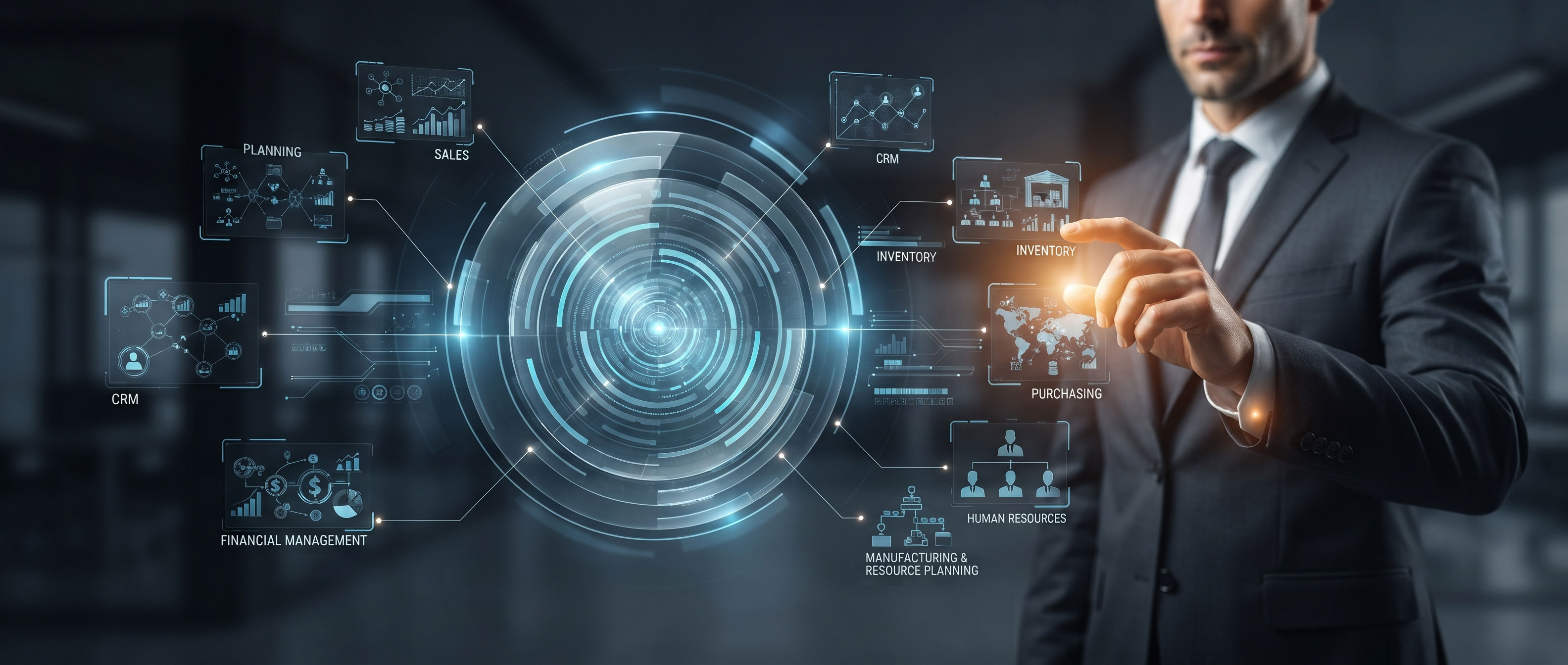
Modern ERP is no longer only about recording transactions and managing workflows. It is evolving into an intelligent business platform that can understand data, recommend actions, automate decisions, and help teams respond faster.
For businesses looking to modernize operations, the combination of ERP, artificial intelligence, automation, and real-time data is becoming a powerful competitive advantage.
From Traditional ERP to Intelligent ERP
Traditional ERP systems are designed to manage business processes by following predefined rules and workflows. A typical process follows a simple flow: data is entered, the system processes it, and a report is generated.
Intelligent ERP adds a new layer of intelligence by helping organisations understand data, identify patterns, predict potential issues, and recommend actions. AI provides the intelligence, while automation helps turn those insights into action by executing repetitive processes with minimal human intervention.
This creates a fundamental shift in how ERP systems support businesses:
ERP is evolving from simply recording what happened to helping businesses understand what is happening, anticipate what may happen next, and take appropriate action.
Why Intelligent Automation Matters for ERP
Businesses generate enormous volumes of operational data every day. However, data alone does not create business value. The challenge is turning that data into timely decisions.
Intelligent automation helps ERP systems address common business problems such as:
- Manual data entry
- Repetitive approval processes
- Delayed reporting
- Inventory inefficiencies
- Invoice processing bottlenecks
- Limited forecasting visibility
- Disconnected business applications
Instead of employees constantly moving information between systems, automation can connect processes and allow teams to focus on higher-value activities.
AI-Powered ERP: What Changes?
The goal is simple: less manual effort, faster decisions, and better business outcomes. The next generation of ERP systems will increasingly use AI across everyday business operations.
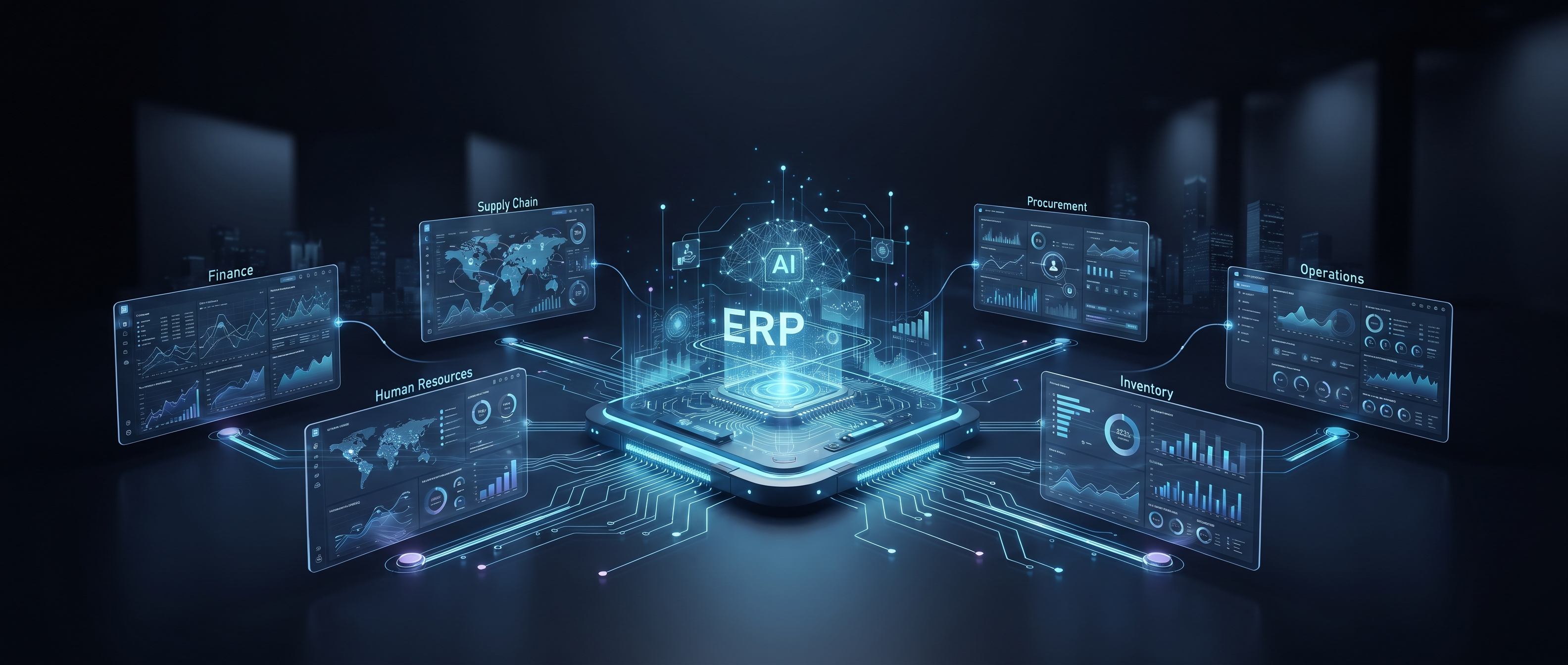
ERP systems can move beyond historical reporting by helping organisations anticipate what may happen next.
For example, AI can analyse purchasing patterns, inventory levels, sales trends, and historical demand to support better forecasting.
Finance teams can use automation for invoice processing, reconciliation, expense analysis, and financial reporting.
AI can also highlight unusual transactions or patterns that may require human attention.
Supply chain disruptions can affect production, inventory, and customer commitments.
Intelligent ERP can analyse multiple data points and help organisations identify risks earlier, optimise inventory, and improve planning.
Employees will increasingly interact with ERP systems through natural language.
Instead of searching through multiple screens, a user could ask:
Which suppliers have delayed deliveries this quarter?
The system can interpret the request, analyse relevant information, and present the answer.
The Rise of Autonomous Business Processes
One of the most important developments is the movement from automation to intelligent orchestration. Traditional automation performs predefined tasks.
Agentic and AI-driven automation can potentially evaluate a situation, determine the next step, and coordinate multiple actions based on business rules and permissions.
Consider an example:
The ERP becomes more than a database. It becomes an orchestration layer for business operations.
Human oversight remains important, particularly for financial, regulatory, and high-impact decisions. The objective is not to remove people from the process, but to let technology handle repetitive work while people manage judgement and strategy.
ERP + Data + AI: The Real Transformation
AI cannot deliver reliable business outcomes without reliable data. This makes data quality, integration, governance, and security critical parts of ERP modernisation.
Organisations need ERP platforms that can connect with:
With a connected technology ecosystem, AI can work with broader business context instead of operating inside isolated systems.
This is where modern integration and automation become essential.
What Should Businesses Prepare For?
Organisations planning their ERP strategy should focus on five areas:
Remove unnecessary complexity and improve ERP architecture.
Break down data silos across enterprise applications.
Identify high-volume processes where automation can create measurable value.
Implement governance, security, access controls, and human oversight.
Choose an architecture that can adapt as AI capabilities evolve.
The Future Is Not Just “AI Inside ERP”
The real opportunity is bigger. The future of ERP is about creating an intelligent digital enterprise where business applications, data, automation, and AI work together.
ERP will continue to provide the operational foundation. AI will add intelligence. Automation will turn intelligence into action. Integration will connect the entire ecosystem.
ERP + AI + Automation = Intelligent Enterprise
Businesses that start this transformation today can move from simply managing operations to predicting, optimising, and continuously improving them.